
No products added!
September 4, 2026
0
A rough patch on your elbows, dull-looking legs before a special outfit, or skin that will not hold onto moisture can make your body-care routine feel less than glowing. When choosing a body scrub versus body peel, the right answer comes down to what your skin needs, how sensitive it feels, and the kind of results you want to see. Both are exfoliating treatments, but they work in very different ways.
A body scrub offers that instant, polished softness you can feel in the shower. A body peel takes a more ingredient-led approach to loosen dull surface cells over time. Knowing when to reach for each can help you create a routine that leaves your skin looking smoother, brighter, and beautifully cared for.
Body Scrub Versus Body Peel: The Main Difference
The biggest difference is simple: body scrubs exfoliate physically, while body peels exfoliate chemically.
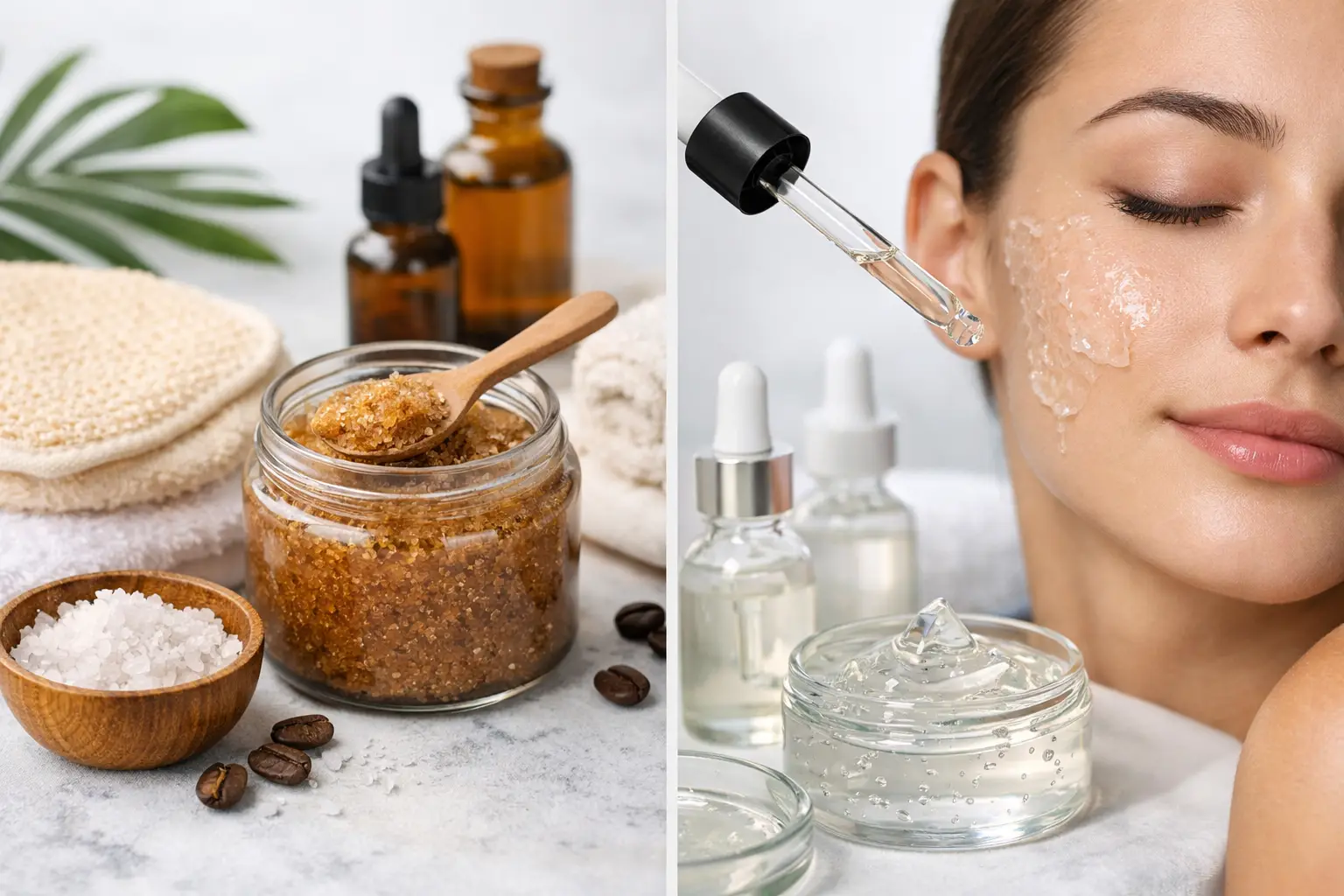
A body scrub contains small particles that buff away dry, flaky skin as you massage it over damp skin. Those particles may be sugar, salt, finely ground coffee, rice powder, or other natural exfoliants. The gentle friction lifts surface buildup right away, making skin feel soft and refreshed after you rinse.
A body peel uses exfoliating ingredients, commonly alpha hydroxy acids such as lactic acid or glycolic acid, or beta hydroxy acids such as salicylic acid. Rather than scrubbing away dead skin cells manually, these ingredients help break down the bonds that keep old cells sitting on the skin’s surface. That makes a peel especially helpful for uneven texture, rough bumps, or a tone that looks less radiant than you would like.
Neither option is automatically better. Your skin, your goals, and your current routine should lead the choice.
What a Body Scrub Does Best
A body scrub is the feel-good favorite for an at-home spa moment. It is ideal when your skin feels dry and dull and you want an immediate softness boost. It can also help prep areas like legs before shaving, smooth elbows and knees, and create a more polished canvas before applying body lotion, body oil, or a gradual self-tanner.
The experience matters, too. A creamy sugar scrub with nourishing oils can turn an ordinary shower into a moment that feels like care. For anyone who loves visible, touchable softness, a scrub delivers that satisfying fresh-skin feeling quickly.
That said, more pressure does not mean better exfoliation. Scrubbing too firmly, using a formula with large sharp particles, or exfoliating too often can leave skin irritated and tight. Your body should feel silky after a scrub, not tender, hot, or uncomfortable.
What a Body Peel Does Best
A body peel is often a smart choice when the concern is more than occasional dryness. Chemical exfoliants can help improve the look of rough texture, dullness, uneven-looking tone, and body breakouts. Salicylic acid, for example, is commonly used for clogged pores and blemish-prone areas such as the back or chest. Lactic acid is often loved for dry, textured skin because it exfoliates while supporting a softer, more hydrated feel.
A peel can also be a beautiful option for areas that are prone to tiny rough bumps, including the upper arms, thighs, or bikini line. Results are usually gradual rather than instant. With consistent, gentle use, skin may begin to look more even and feel smoother without the friction of a manual scrub.
Because body peels are active treatments, they need a little more care. Start slowly, especially if you are new to acids or use other active skincare ingredients. A leave-on body peel may make skin more sensitive to sunlight, so daily sunscreen on exposed areas is part of keeping your glow protected.
How to Choose Between a Scrub and a Peel
Think about the condition of your skin on the day you exfoliate. If it simply feels flaky, dry, or in need of a quick refresh, a gentle body scrub may be all you need. Follow with a rich moisturizer while your skin is still slightly damp, and you have an easy ritual for soft, comfortable skin.
If roughness keeps returning despite moisturizing, or you are working on visible texture and uneven tone, a body peel may be the better match. It is designed to support ongoing skin renewal, so patience and consistency matter more than a dramatic one-time treatment.
Sensitive skin calls for an even gentler approach. Choose fragrance-free, finely textured scrubs or mild acid formulas, and patch test before applying a new product over a large area. If your skin is currently sunburned, freshly shaved, irritated, or compromised, skip exfoliation entirely and focus on soothing moisture until it feels calm again.
For many beauty routines, using both is possible, just not at the same time. You might use a body peel once or twice a week for texture support, then enjoy a gentle scrub on a separate day when you want that smooth, pampered finish. This is not about doing the most. It is about giving your skin exactly what it can handle.
How Often Should You Exfoliate Your Body?
For most people, once or twice a week is enough for a body scrub. If your skin is very dry or sensitive, once a week or even every other week may feel better. For body peels, follow the product directions first. Some gentle formulas are made for more regular use, while stronger treatments may only be appropriate once a week.
Pay attention to your skin’s response instead of chasing a strict schedule. Stinging, redness, persistent dryness, peeling, or a suddenly sensitive feeling are signs to pause. Healthy exfoliation supports your skin barrier. Over-exfoliation can weaken it, making skin feel rougher and less comfortable in the long run.
It also helps to avoid stacking intense treatments. Do not use a scrub and a strong peel in the same shower, and be cautious with acids right after shaving or waxing. Freshly hair-free skin can be more reactive, so save exfoliation for another day when possible.
Build a Soft-Skin Routine That Feels Good
Start with warm, not hot, water. Hot showers can leave dry skin feeling even more stripped. Use your chosen exfoliator gently, giving extra attention to places that tend to collect dryness, such as knees, ankles, elbows, and heels. Rinse thoroughly, pat skin dry, and apply a moisturizing body cream, butter, or oil right away.
For a body peel, apply it exactly as directed. If it is a leave-on lotion or serum, allow it to settle before layering a simple moisturizer if your skin needs extra comfort. Keep the rest of your routine calm on peel nights. Gentle cleansing and hydration are often enough.
Ingredient choices can make the ritual feel even more aligned with your values. Look for formulas that fit your preferences, whether that means vegan options, natural ingredients, paraben-free body care, or handmade blends that make your shower routine feel more personal. Beautiful body care is not only about how your skin looks. It is also about taking a few minutes to feel restored in it.
When to Ask a Professional
Exfoliating body products can support smoother-looking skin, but they are not the answer for every concern. If you have painful breakouts, eczema flare-ups, unexplained dark patches, persistent itching, or skin that reacts strongly to most products, a dermatologist can help you find a safer plan. More exfoliation is rarely the answer when skin is already inflamed.
Your everyday glow does not require a complicated shelf or harsh treatments. Choose the scrub when you want immediate softness, choose the peel when you want steady support for texture and tone, and let your skin set the pace. A gentle routine you enjoy repeating is often what keeps confidence feeling as soft and radiant as your skin.