
No products added!
September 2, 2026
0
That soft, polished feeling after a shower is not only about lotion. Body peeling helps lift away the buildup of dry, dull skin that can leave arms, legs, elbows, knees, and feet looking uneven or feeling rough. Done with the right formula and a gentle rhythm, it is one of those small self-care steps that can make your whole body routine feel more luxurious.
For a glow that looks fresh rather than irritated, the goal is not to scrub harder. It is to choose a peeling style that suits your skin, use it consistently without overdoing it, and follow with moisture that keeps your skin feeling beautiful and soft.
What Body Peeling Does for Your Skin
Your skin naturally sheds dead cells, but that process can slow down with dry weather, shaving, sun exposure, and everyday life. When those cells linger, skin may feel textured, look ashy, or seem less radiant even when you are moisturizing regularly. A body peeling product supports that shedding process so newer-looking skin can come forward.
The most noticeable benefit is often smoothness. Body peeling can help soften rough areas such as knees, elbows, heels, and the backs of the arms. It can also help body lotion apply more evenly, creating the hydrated, healthy-looking finish many of us want from our daily glow routine.
Regular exfoliation may improve the look of uneven texture and dullness over time. If you are concerned about the appearance of dark marks after blemishes, ingrown hairs, or uneven tone, gentle exfoliation can be a helpful part of your routine. It is not an overnight fix, and it should never sting or leave your skin feeling stripped. Consistency, patience, and moisture make the difference.
Physical vs. Chemical Body Peeling
Not every body peeling product works the same way. The best choice depends on your skin’s needs, your preferred shower routine, and how sensitive your skin tends to be.
Physical exfoliants for an instant smooth feel
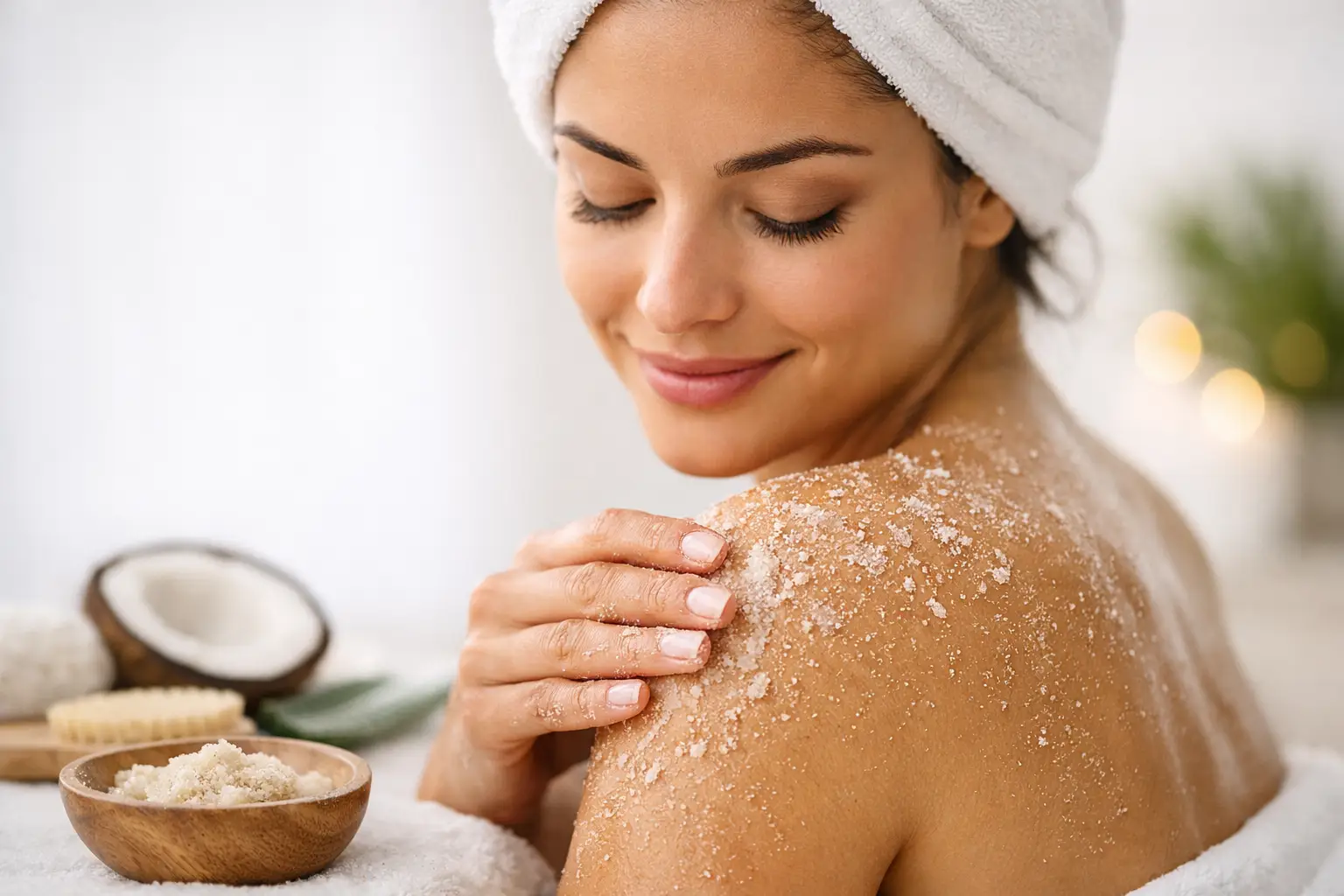
Physical exfoliants use fine particles or textured ingredients to buff away surface dryness as you massage. Think of body scrubs made with sugar, salt, coffee, finely milled botanicals, or other gentle polishing ingredients. They are especially satisfying before an event, a weekend away, or a fresh shave because you can feel the smoother finish right away.
A good scrub should feel polished, not painfully gritty. Large, sharp particles and aggressive rubbing can create irritation, particularly on delicate areas like the chest. Let warm water soften skin first, then use light circular motions for about 30 seconds per area. The product should do the work – your hands do not need to press hard.
Chemical exfoliants for texture and bumps
Chemical exfoliants use acids or enzymes to loosen dead skin cells without scrubbing. Common options include lactic acid, glycolic acid, salicylic acid, urea, and fruit enzymes. These are often found in body lotions, washes, serums, pads, and treatment-style peels.
This style can be a smart option for persistent rough texture, the look of tiny bumps, or areas prone to clogged pores and ingrown hairs. Lactic acid and urea are often appreciated by dry skin types because they can exfoliate while supporting a softer feel. Salicylic acid is commonly chosen for blemish-prone areas such as the back or chest.
Chemical products can be effective, but stronger is not always better. Start with the directions on the label and give your skin time to adjust. If you are new to acids, choose one exfoliating product rather than layering a scrub, acid lotion, and peel on the same day.
How Often Should You Exfoliate Your Body?
For most people, body peeling once or twice a week is enough. That schedule can keep skin feeling smooth while preserving the comfortable, hydrated feel you want. If your skin is very dry, sensitive, or easily reactive, begin once every seven to ten days. If you use an acid-based body lotion, you may only need a physical scrub occasionally, if at all.
Your skin will tell you when the routine is too much. Tightness, burning, redness, itchiness, flaking, or sudden sensitivity are signs to pause and focus on simple moisture. Exfoliation should leave skin touchably soft, not tender.
Season matters too. During colder months, indoor heat and dry air can make skin more vulnerable, so you may need to exfoliate less often and moisturize more generously. In warmer months, when you are showing more skin and using sunscreen more often, gentle body peeling can help maintain a smooth-looking finish. Just remember that freshly exfoliated skin can be more sun-sensitive, so apply broad-spectrum sunscreen to exposed areas every day.
A Simple Body Peeling Routine That Feels Good
The best routine is the one you can enjoy and repeat. Set aside a little extra time after a shower when you are not rushing, perhaps on your reset night or before your favorite body-care ritual.
Start by cleansing with lukewarm water. Very hot water can make dryness feel worse, especially if you plan to exfoliate. On damp skin, apply your scrub or treatment according to its instructions. For a physical scrub, work gently from ankles upward, paying extra attention to rough spots. Rinse well without continuing to rub.
After patting your skin dry, apply body cream, body butter, or a nourishing oil while skin is still slightly damp. This step is essential. Exfoliation removes dull surface buildup, while moisturizer helps hold on to the soft, supple finish you are trying to create. If you use a chemical exfoliating lotion, apply it to clean, dry skin as directed, then follow with a plain moisturizer if your skin needs more comfort.
Give special care to areas with different needs. Heels and elbows can usually handle a little more attention, while the neck, chest, bikini line, and underarms deserve a lighter touch. Do not use a body scrub on broken, sunburned, freshly waxed, or irritated skin.
Body Peeling Before Shaving, Waxing, and Self-Tan
Timing can change your results. A gentle body peel one day before shaving may help create a smoother surface and reduce the chance of hairs becoming trapped under dead skin. Avoid scrubbing immediately after shaving, though, because freshly shaved skin can be more sensitive.
Before waxing, skip strong exfoliants for a few days unless your waxing professional gives other instructions. After waxing, wait until redness and tenderness have fully settled before using exfoliation again. When you restart, a gentle chemical exfoliant can sometimes be useful for the appearance of ingrown hairs, but go slowly and avoid irritated areas.
If you use self-tanner, exfoliate and moisturize beforehand, ideally the day before application. Focus on dry zones like ankles, knees, elbows, wrists, and hands. This helps self-tanner look more even and reduces the chance of product catching on dry patches. Do not exfoliate right after tanning if you want the color to last.
Choosing a Formula for Your Skin Goals
For dry, dull skin, look for a creamy scrub or a gentle lotion featuring moisturizing ingredients alongside mild exfoliants. Ingredients such as shea butter, plant oils, glycerin, lactic acid, and urea can support softness without making your routine feel harsh.
For rough-feeling arms, legs, or feet, a fine-grain scrub may deliver the immediate polish you love. For body breakouts or the look of clogged pores, consider a targeted salicylic acid product made for the body. If uneven-looking tone is your concern, gentle exfoliation paired with daily sunscreen and nourishing moisture is usually a more skin-friendly approach than chasing an intense peel.
Clean, vegan, paraben-free, and natural-ingredient preferences can absolutely guide your selection, but the formula still needs to suit your skin. Natural does not automatically mean gentle, and an ingredient-rich product is not automatically right for every body. A quick patch test on a small area is a thoughtful move whenever you are trying something new.
The Glow Comes From Balance
Body peeling is not about chasing perfectly filtered skin. It is about giving your body the same thoughtful care you give your face, whether that means smoothing your legs before wearing your favorite dress or taking a quiet shower that helps you feel refreshed and confident.
Choose gentle care, seal it in with moisture, and let your routine support the beautiful, soft skin you are already in.