
No products added!
September 6, 2026
0
A brightening routine should make your skin look fresh, even, and beautifully lit from within, not leave it feeling tight, tingly, or overwhelmed. Knowing how to layer brightening serums helps you get the most from every drop while giving your skin the patience and support it needs to glow.
The goal is not to stack every brightening ingredient you own. It is to choose formulas that work well together, apply them in the right order, and stay consistent enough to see a difference. Dark spots, post-breakout marks, dullness, and uneven tone often improve gradually. A calm, cared-for complexion is always the best starting point.
Start With Clean, Comfortable Skin
Your serums perform best when they are applied to freshly cleansed skin. Use a gentle cleanser that removes makeup, sunscreen, and daily buildup without making your face feel squeaky-clean. That stripped feeling can be a sign that your skin barrier needs a little more kindness.
After cleansing, pat your skin so it is lightly damp rather than dripping wet. Some hydrating serums are especially lovely on damp skin, while treatment serums can be applied once the skin is almost dry. Check the directions on your product when you are unsure.
If you use a toner, choose one that supports your routine instead of competing with it. A hydrating toner can add a soft layer of moisture before serums. If your toner contains exfoliating acids, use it carefully and avoid pairing it with several other strong treatments in the same routine.
How to Layer Brightening Serums by Texture
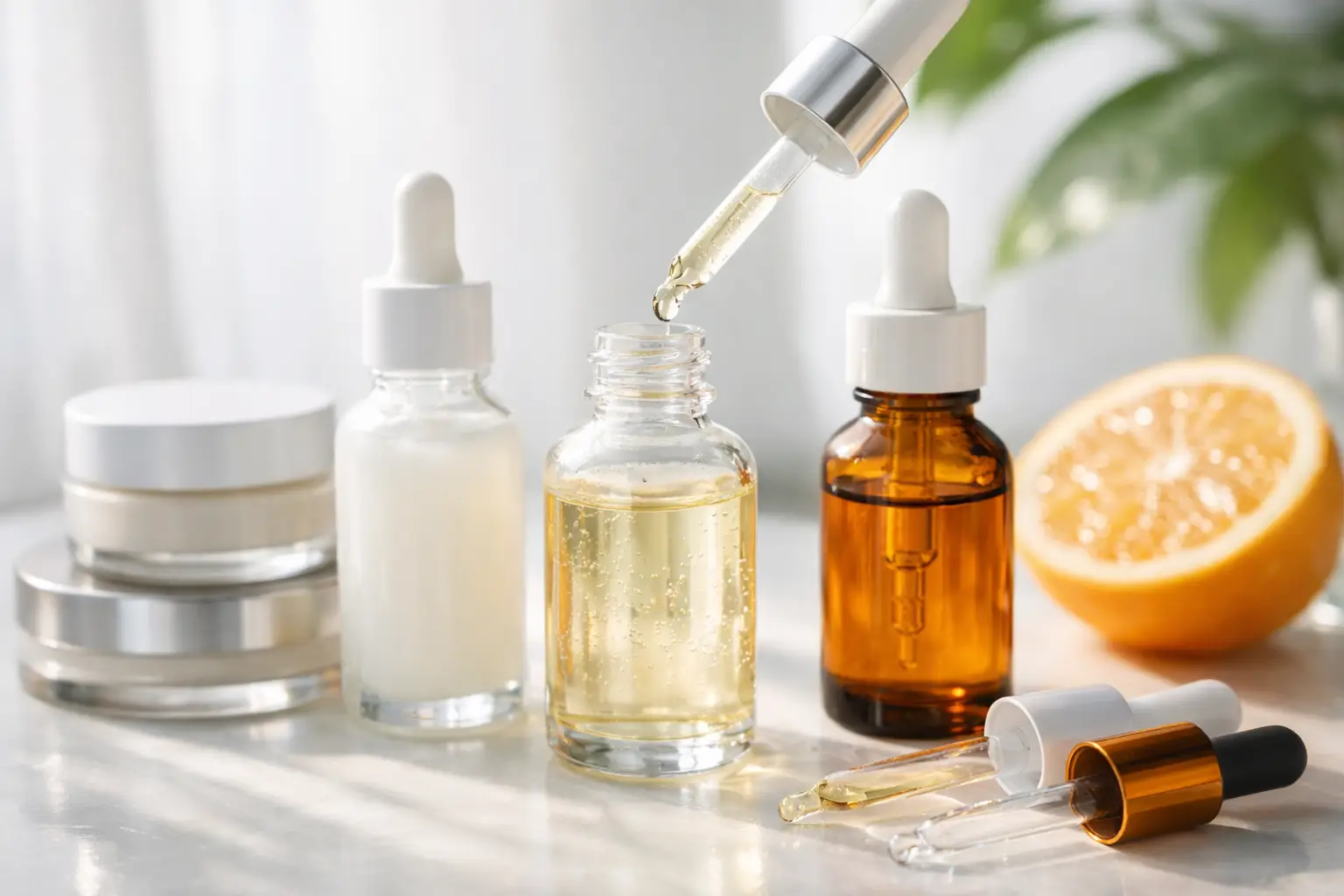
The simplest rule is to apply from thinnest to thickest. Watery, fast-absorbing formulas go first, followed by lightweight gels and milky serums, then richer creams or oils. This helps each layer sit close to the skin instead of creating a slippery barrier over the product beneath it.
A brightening routine might begin with a watery antioxidant serum, followed by a hydrating serum, then a creamy serum designed for discoloration or uneven tone. Finish with moisturizer to seal in comfort and help reduce moisture loss.
Give each serum about 30 to 60 seconds to settle before applying the next. You do not need to wait until your face feels completely dry. The idea is simply to avoid rubbing one formula away while you apply another.
Use gentle pressing motions instead of aggressive rubbing. Two or three drops is often enough for the entire face. More product does not always mean more radiance, and overloaded skin can pill under makeup or feel congested.
Choose Brightening Ingredients That Make Sense Together
Brightening serums do different jobs. Some help defend against the look of dullness caused by environmental stress, while others focus on the appearance of dark spots, uneven color, or leftover blemish marks. A balanced pairing can be more effective than relying on one very strong formula.
Vitamin C is a favorite for morning glow. It can help skin look brighter and more even while supporting a radiant finish under makeup. For some people, especially those with sensitive skin, a high-strength vitamin C formula can sting. Start slowly if your skin is new to the ingredient.
Niacinamide is an easygoing option that layers well with many routines. It can help improve the look of uneven tone, excess shine, and visible pores while supporting a smoother-looking complexion. It is often a beautiful partner for vitamin C, hydrating serums, or gentle spot-fading treatments.
Tranexamic acid, alpha arbutin, licorice root, and azelaic acid are also popular choices for the appearance of discoloration and stubborn dark marks. They may be used alongside hydration-focused ingredients such as hyaluronic acid, glycerin, or panthenol. Hydration matters because skin that feels comfortable and supported is more likely to tolerate an effective brightening routine.
Retinol and exfoliating acids can improve texture and tone over time, but they need a more thoughtful approach. They are not always the right products to layer with other active brightening treatments on the same night. If your skin is dry, reactive, or new to active skincare, alternate them instead.
A Simple Morning Brightening Routine
Morning is a great time for protective, glow-supporting layers. Keep it light enough that your skin feels comfortable and your makeup applies smoothly.
Start with cleanser, then apply a hydrating serum if your skin tends to feel dry or tight. Follow with a vitamin C or other antioxidant brightening serum. If desired, add a niacinamide serum afterward, then finish with moisturizer.
Sunscreen is the step that protects all that brightening work. Apply a broad-spectrum SPF 30 or higher every morning, even when you plan to be indoors near windows or only stepping outside briefly. Without daily sunscreen, dark spots can become more noticeable again, especially after sun exposure. Let your sunscreen set before applying foundation, sculpting powder, or the rest of your elevated look.
Build a Gentle Evening Routine
At night, your skin has time to rest in richer, more comforting layers. After cleansing, choose one main treatment focus instead of applying every active serum at once.
On a brightening night, apply a serum with ingredients such as tranexamic acid, alpha arbutin, niacinamide, or licorice root. Follow with a hydrating serum if needed, then a nourishing moisturizer. This can be a simple, consistent routine for anyone focused on the look of dark spots and uneven tone.
On retinol nights, keep the rest of your routine soft and basic. Cleanse, apply your retinol as directed, then use a moisturizer. If you are sensitive, try the sandwich method: moisturizer, retinol, then another light layer of moisturizer. This can help reduce dryness while you build tolerance.
On exfoliation nights, use either an exfoliating serum or pad, not multiple exfoliating products. Follow with hydration and moisturizer. Skip retinol and strong brightening acids that evening. Skin does not need to feel irritated to be effective.
Do Not Layer These Strong Treatments Carelessly
Certain combinations can be too much, particularly when you are beginning a new routine. The concern is not that every ingredient pairing is automatically harmful. It is that too many powerful treatments can leave your skin red, flaky, sensitive, or more prone to the appearance of dark marks after irritation.
Be thoughtful when combining these four categories in one routine:
- Retinol or prescription retinoids
- Exfoliating acids such as glycolic, lactic, or salicylic acid
- High-strength vitamin C, especially if your skin stings easily
- Benzoyl peroxide acne treatments
If you use one of these, consider making it the main active step for that routine. Brightening is a long game, and steady progress feels much better than trying to fix everything overnight.
Patch Test and Introduce One Change at a Time
A new serum can look beautiful on paper and still be the wrong fit for your skin. Patch test first by applying a small amount to your inner arm or along the jawline for several days. Watch for persistent itching, burning, swelling, rash, or unusual irritation.
When you add a new brightening serum, use it two or three times a week at first. Give your skin at least a week or two before introducing another active formula. This makes it much easier to understand what is helping, what is unnecessary, and what may be causing a reaction.
If you have melasma, eczema, rosacea, persistent acne, or darker marks that are changing in shape or color, consider speaking with a dermatologist. Personalized guidance can be especially valuable when discoloration feels stubborn or your skin is easily irritated.
Let Your Routine Support Your Everyday Glow
A radiant complexion is not built by complicated layering alone. Gentle cleansing, enough moisture, daily sunscreen, and a little patience can make brightening serums feel more effective and more enjoyable to use. Think of each layer as a small confidence ritual: a moment to care for your skin, enjoy your softness, and show up feeling like your most luminous self.