
No products added!
August 6, 2026
0
That waist trainer should feel supportive, smooth, and confidence-boosting – not like a daily struggle to fasten. The right fit can help your outfit sit beautifully and make your body-confidence routine feel more comfortable. This waist trainer sizing guide walks you through measuring correctly, reading a size chart, and knowing when a trainer is simply too small.
Start With Your Natural Waist Measurement
Your natural waist is the narrowest part of your torso, usually above your belly button and below your rib cage. It is not automatically the same measurement as your jeans size or the widest part of your midsection. Since every waist trainer is designed differently, your current clothing size is only a rough reference point.
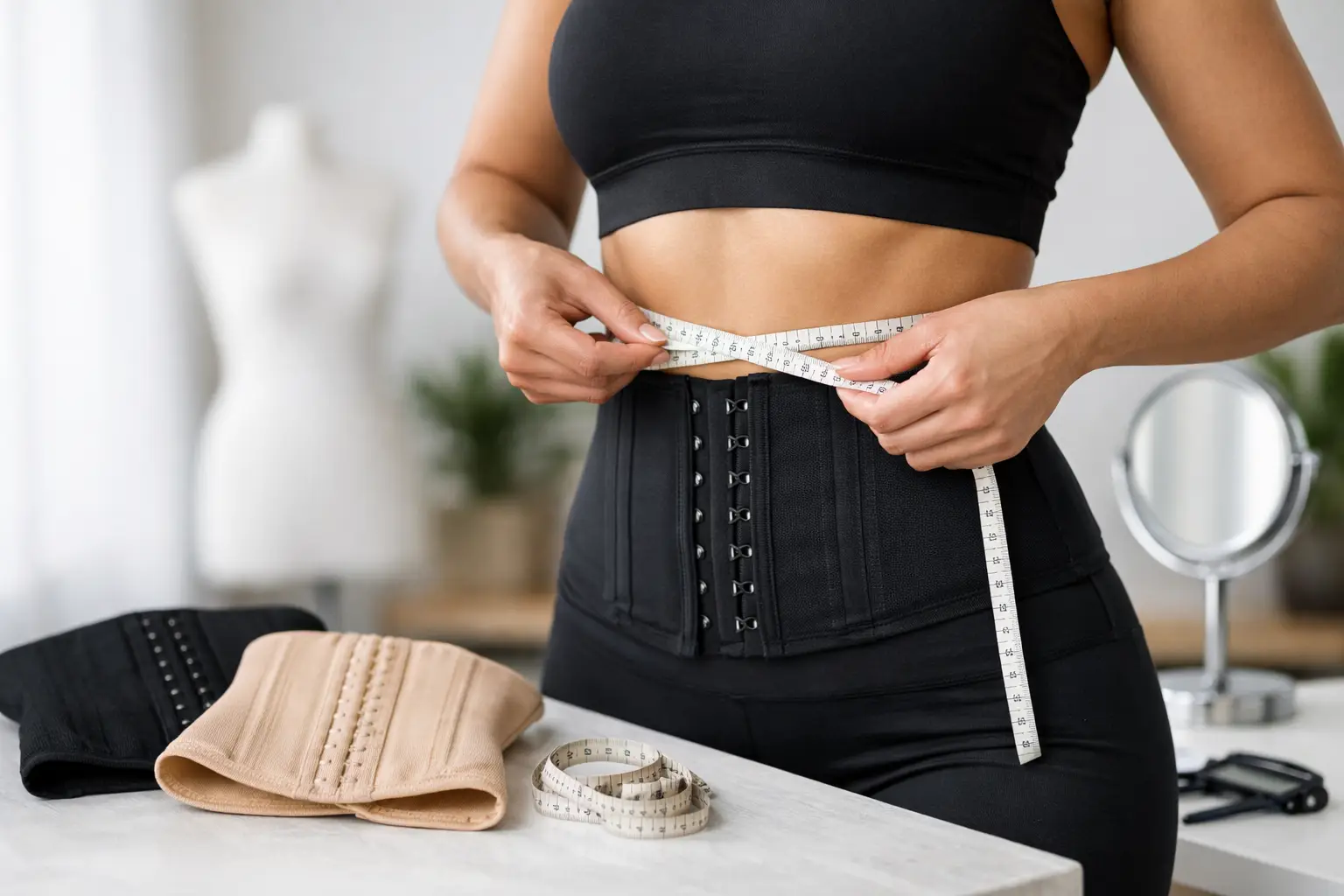
For the clearest measurement, use a soft measuring tape directly against bare skin or over a thin, fitted layer. Stand naturally, breathe normally, and keep the tape parallel to the floor. Do not pull it tight enough to pinch, and do not hold your breath or pull your stomach in. The goal is an honest, relaxed number that helps you find a trainer you can actually wear comfortably.
Take your measurement two or three times. If the numbers vary slightly, use the larger measurement. This is especially helpful if you are shopping for a firmer compression style or you plan to wear the trainer for more than a short occasion.
A Simple Way to Measure
- Find the narrowest area of your torso, between your ribs and hips.
- Wrap a flexible tape measure around that area without twisting it.
- Exhale naturally and check that the tape feels snug but not restrictive.
- Write down the measurement in inches, then compare it with the product’s own size chart.
Measure before eating a large meal or at a time when you feel noticeably bloated if possible. Your body can naturally fluctuate throughout the day, and a measurement taken when you are comfortable is the best starting point.
How to Use a Waist Trainer Size Chart
A waist trainer sizing guide is most useful when you treat each product chart as the final word. A medium in one style may not fit like a medium in another. Fabrics, hook placement, boning, length, and compression level all change the fit.
Match your natural-waist measurement to the chart provided for the exact trainer you are considering. If your measurement falls clearly within one range, that is usually your starting size. If it lands between two sizes, the right choice depends on the trainer’s fabric and your preferred feel.
For a very firm latex-style trainer, sizing up is often the more comfortable option when you are between sizes. You can still enjoy shaping support without forcing the hooks closed. For a more flexible, stretchy everyday style, the smaller size may work if the brand specifically describes the fabric as forgiving and you are comfortable with a closer fit.
Do not size down just to chase a smaller number. A waist trainer is not more effective because it causes pain or leaves you struggling for breath. The best size is the one that supports your shape while allowing you to sit, move, and breathe with ease.
What a Good Waist Trainer Fit Feels Like
A properly fitted waist trainer should feel snug around your middle from the first wear. You may notice gentle compression and a smoother silhouette under your clothes, but you should still be able to take a full, comfortable breath and move through your normal routine.
If your trainer has multiple rows of hooks, begin on the loosest row unless the product instructions say otherwise. This gives your trainer room to adjust over time and helps prevent the temptation to start with excessive compression. There is no prize for fastening the tightest row on day one.
Look in the mirror from the front and side. The trainer should lie fairly even against your torso without rolling, folding sharply, digging into your ribs, or creating painful pressure points. A little settling as you move can be normal, especially with a new garment. Constant bunching is usually a sign that the style, length, or size is not right for your body.
Signs You May Need a Larger Size
A trainer that is too small can take the confidence out of your self-care routine. Consider moving up a size if you cannot close it without pulling hard, feel pinching around the ribs or hips, or notice that the hooks strain apart. Numbness, tingling, dizziness, pain, or difficulty breathing are clear signals to remove it right away.
Also pay attention to what happens once you sit down. A trainer can feel fine standing in front of the mirror but become uncomfortably tight when you drive, work at a desk, or enjoy a meal. Your waist trainer should fit your real life, not only your standing pose.
Signs the Trainer May Be Too Large
A waist trainer that is too large will not offer much support and may shift during the day. You may see gaps at the waist, loose fabric that wrinkles beneath clothing, hooks that close with no resistance, or a trainer that rolls because it is not anchored comfortably against the body.
Before choosing a smaller size, make sure the issue is not the style itself. A short torso may need a shorter trainer to avoid pressure at the ribs and hips. A longer torso may prefer added coverage so the garment stays balanced. The right cut can make as much difference as the size label.
Choose Your Size for the Style You Want to Wear
Not every waist trainer is meant for the same moment. If you want a smoother look beneath a fitted dress or a polished outfit, a flexible, low-profile style may be more comfortable than a high-compression trainer. For a special event, you may prefer firmer shaping for a shorter wear period. For at-home routines, comfort and movement usually deserve top priority.
Your personal body shape matters too. If you carry more fullness around your lower belly, hips, or rib area, choose a trainer designed to sit comfortably across those areas instead of relying only on your waist number. A trainer that fits the waist but presses hard at the top or bottom will not feel flattering for long.
Review the product details before choosing. Pay attention to the length, closure type, stretch level, and whether the fabric is designed for daily wear, workouts, or occasional styling. A clean, confident look begins with choosing a piece that suits your routine.
Common Sizing Mistakes to Avoid
The most common mistake is measuring too tightly. Pulling the tape measure in may give you a smaller number, but it will not give you a better fit. Another mistake is relying on a past measurement after weight changes, hormonal fluctuations, or changes in your fitness routine. A quick new measurement can save you the disappointment of receiving a trainer that feels wrong.
Avoid comparing your size to someone else’s, too. Bodies are individual, and the same number can sit differently depending on height, torso length, and natural shape. Let your own measurements guide your choice.
Finally, do not expect a new waist trainer to feel broken in after a few minutes. Start slowly. Wear it for a short period at home, notice how your body feels, and increase wear time only if you remain comfortable. A trainer may support a smooth, sculpted appearance, but it is not a substitute for medical care, nutrition, movement, or rest.
Make Comfort Part of Your Confidence Routine
Wear your trainer over clean, dry skin or a thin camisole if you are prone to sensitivity. Keep it clean according to its care instructions, and give your skin a break between wears when needed. Pair it with the self-care details that make you feel radiant, from soft body care to an elevated outfit that feels like you.
If you are pregnant, recovering from surgery or childbirth, managing a health condition, or have concerns about compression garments, ask a qualified health professional before wearing a waist trainer. Your comfort always comes first.
The best fit is not about squeezing into a smaller size. It is about choosing support that lets you stand tall, move freely, and enjoy your look with confidence.