
No products added!
August 27, 2026
0
Matte foundation should make your complexion look smooth, confident, and beautifully put together – not flat, tight, or like a mask by lunchtime. Knowing how to choose matte foundation starts with looking beyond the word “matte” on the label. The right formula controls unwanted shine while letting your natural skin still look like skin.
A soft matte finish can be especially beautiful when you want polished coverage for work, events, photos, or your everyday glow routine. The secret is choosing for your skin’s needs, not simply choosing the fullest coverage or the most oil-absorbing formula.
Start With Your Skin Type
Your skin type tells you how a matte foundation is likely to wear from morning to night. If your forehead, nose, and chin become shiny quickly, a true matte or oil-controlling formula can help your makeup stay fresh. Look for language such as “long-wear,” “shine control,” “oil-free,” or “soft matte.” These formulas can reduce the need to powder throughout the day.
Combination skin often needs a more flexible choice. A natural matte or soft matte foundation is usually more forgiving than an ultra-matte formula, especially if your cheeks are normal or dry while your T-zone gets oily. You can also apply a mattifying primer only where shine appears, rather than using a drying base across your whole face.
If your skin is dry, dehydrated, or prone to flaking, matte foundation is still an option – but formula and skin prep matter more. Choose a liquid foundation described as hydrating, comfortable, skin-smoothing, or soft matte. Avoid assuming that powder foundation is automatically the best matte choice; on dry areas, it can cling to texture. A nourishing moisturizer and a little time for it to absorb can make a dramatic difference in how foundation sits.
Sensitive or breakout-prone skin may benefit from checking the full ingredient list rather than relying on finish alone. If clean-beauty choices are part of your routine, look for formulas that align with your preferences, such as vegan, paraben-free, or no mineral oil. “Natural ingredients” does not guarantee a formula will work for every skin type, so introduce any new base product thoughtfully.
How to Choose Matte Foundation by Finish and Coverage
Not every matte foundation gives the same effect. A velvet, natural matte, or soft matte finish takes down shine while preserving a little dimension in the skin. It is a beautiful starting point for most people because it looks polished without looking overly dry.
A full matte foundation creates a more perfected, shine-resistant appearance. It can be a great choice for very oily skin, humid days, long events, or moments when you want your makeup to stay photo-ready. The trade-off is that a full matte formula can emphasize dry patches, fine lines, or texture if your skin is under-moisturized or the shade is layered too heavily.
Coverage is a separate decision. Sheer-to-light coverage is ideal if you mainly want to even out tone and soften a little redness. Medium coverage is often the everyday sweet spot: it can blur unevenness, dark spots, and blemish marks while still allowing your complexion to feel natural. Full coverage offers more camouflage, but it does not need to be applied everywhere. Start with a thin layer, then add a small amount only where you want extra confidence.
Think about the finish you love in real life, not only in a product photo. If you want a smooth complexion with a little life and warmth, soft matte is likely your match. If you prefer a more sculpted, perfected look with minimal shine, choose a classic matte formula and pair it with hydrating skin care underneath.
Find Your Shade and Undertone in Natural Light
A foundation can have the perfect finish and still look off if the shade is wrong. Your best match should blend into the skin along your jawline and flow naturally into your neck and chest. Testing on your hand is convenient, but the color there often differs from your face.
Start by identifying whether your skin appears warm, cool, neutral, or olive. Warm undertones tend to look golden, peachy, or yellow. Cool undertones often show pink, rosy, or bluish tones. Neutral undertones balance both, while olive skin can have a subtle green-gold cast that is not always easy to match with standard warm shades.
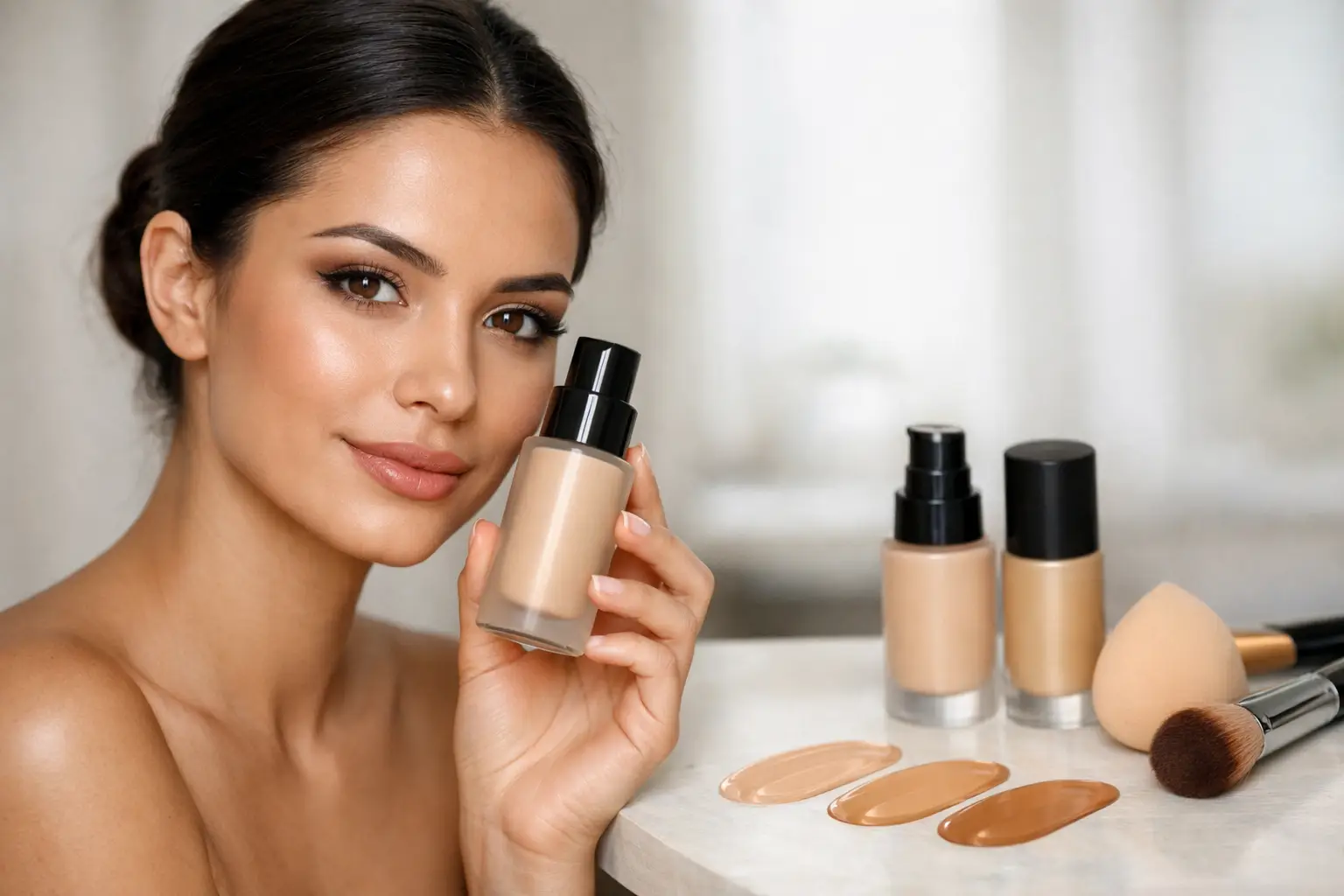
When possible, compare two or three close shades in stripes along the jawline. Let them sit for several minutes before deciding. Some foundations oxidize, meaning they deepen or shift slightly after they interact with your skin and natural oils. Check your match near a window or outdoors, because store lighting can hide a mismatch.
If your face is darker than your neck from sun exposure or lighter from regular exfoliation and brightening care, match the foundation to the area you want your overall complexion to resemble. Many people choose the neck and upper chest as their guide for the most balanced, blended result.
Choose a Formula That Fits Your Routine
Liquid matte foundation is the most versatile option for buildable coverage and a smooth, blended finish. It works well with a brush, sponge, or clean fingertips, depending on the coverage you want. A brush generally gives more coverage, while a damp sponge can soften the finish and keep it from looking too heavy.
Powder foundation is quick, portable, and helpful for touch-ups, especially on oily skin. It can give a beautifully blurred look, but it may settle into dry areas or textured skin. If you use powder foundation, apply it lightly and focus on the T-zone first.
Stick foundation offers convenience and targeted coverage. Many sticks have a creamier feel, but matte versions can still be long-wearing. They are ideal for someone who likes to apply foundation precisely, blend as they go, and keep a product in a makeup bag for easy refreshes.
Your lifestyle matters here. For a fast morning routine, a medium-coverage soft matte liquid may give the most natural result with the least effort. For a long workday, celebrations, or warm-weather outings, a transfer-resistant matte formula may be worth the extra prep and careful blending.
Prep Is What Keeps Matte Makeup Looking Fresh
Matte foundation performs best on cared-for skin. Start with gentle cleansing, then apply moisturizer suited to your skin type. Even oily skin benefits from hydration; when skin feels stripped, it can sometimes produce more oil and make makeup separate sooner.
Give moisturizer a few minutes to settle before foundation. If large pores or shine are your biggest concern, use a small amount of primer where you need it most. If you are dry, choose a hydrating primer or skip primer entirely if your moisturizer already creates a smooth base.
Apply foundation in thin layers and blend outward from the center of the face. Use concealer after foundation so you only add coverage where it is needed. Then set selectively. A light dusting of powder on the forehead, nose, chin, and under-eye area can extend wear without making your cheeks look dull.
For more radiance, bring back dimension with cream or powder blush, bronzer, and a subtle highlight placed high on the cheekbones. Matte foundation does not mean your entire face has to be matte. That contrast is what creates a fresh, elevated look.
Watch for These Signs You Need a Different Formula
If your foundation separates around the nose within a few hours, you may need better skin prep, less product, or a more oil-controlling formula. If it looks patchy immediately, your moisturizer and foundation may not layer well together, or dry skin may need more hydration before makeup.
When foundation turns orange or noticeably darker during wear, try a slightly lighter shade or a formula with a different undertone. If it emphasizes every line and dry patch, move from full matte to soft matte, apply less powder, and give your skin care more time to absorb.
A good matte foundation should feel like support, not something you are waiting to wash off. Build your base around the finish that makes you feel most like yourself – smooth, comfortable, and ready to show up with confidence.